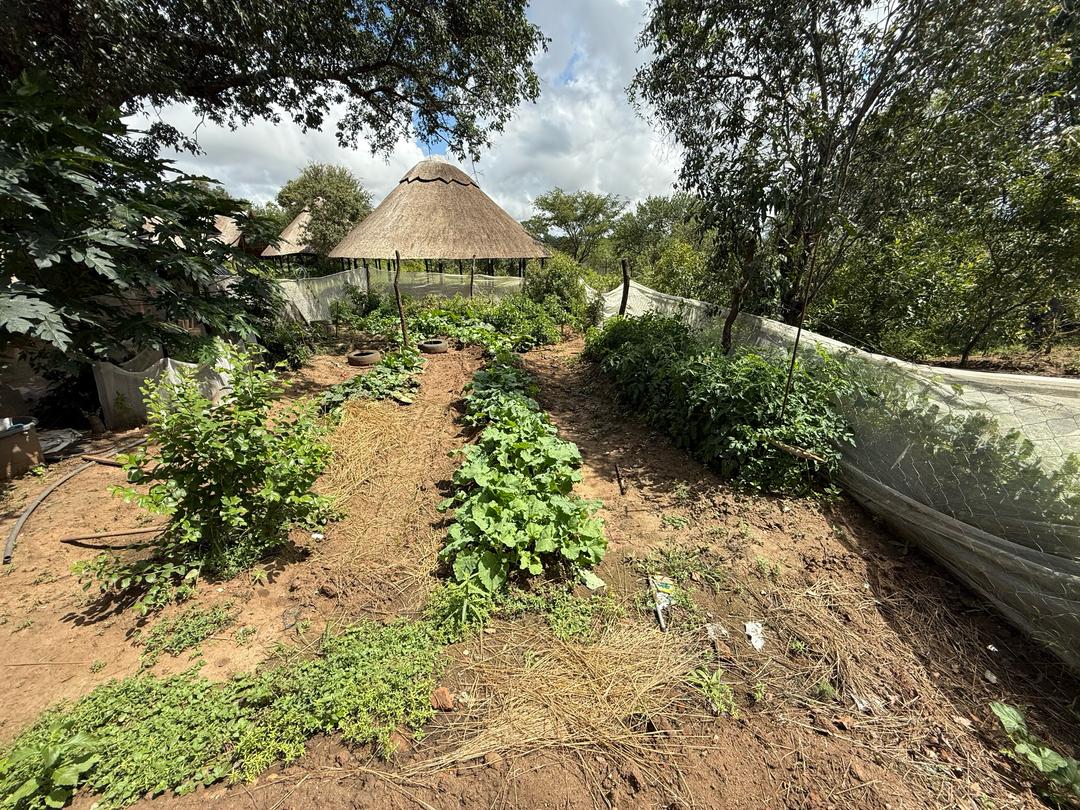
This project establishes a thriving permaculture ecosystem at two linked sites — Murawi Primary School and the Nook Hub — combining a school garden, borehole, fish pond, pig structures, water harvesting, and a community tree nursery to build food security, practical agricultural skills, and environmental stewardship.
Why Permaculture
Communities in Matibi need nutritious food, clean water, environmental knowledge, and income-generating projects. Many children grow up without practical farming skills. By involving learners, teachers, and community members in permaculture activities, this project rebuilds the relationship with nature — teaching responsibility, teamwork, and sustainable land care from an early age.
Murawi Primary School Activities
- •Borehole drilling, casing and installation for reliable water supply
- •Establishment and fencing of a 50m × 50m school garden
- •School leader and teacher training in permaculture principles
- •Tree planting and water harvesting systems
Nook Hub Activities
- •Organic and sustainable Nook garden — also serves as a training site for learners
- •Fish pond (10m × 10m) — income-generating activity for the Nook
- •Proper pig structures — 6 compartments (1 male, 3 females, piglet areas)
- •Community tree nursery — fruit trees and indigenous species for planting activities
- •Water harvesting (5m × 5m catchment) and swales to control water flow and improve soil moisture
- •Landscape design — pathways and resting areas
Budget Breakdown
Murawi Primary School
- •Borehole drilling and installation: $7,322.64
- •Garden establishment and fencing (50m × 50m): $2,829.11
- •Training: $129.00
- •Seeds and tree planting: $152.20
Nook Hub
- •Sustaining the garden: $353.26
- •Fish pond: $1,055.00
- •Livestock (pig structures): $3,635.16
- •Water harvesting: $1,055.00
- •Tree planting: $375.00
Total: USD $16,906.37