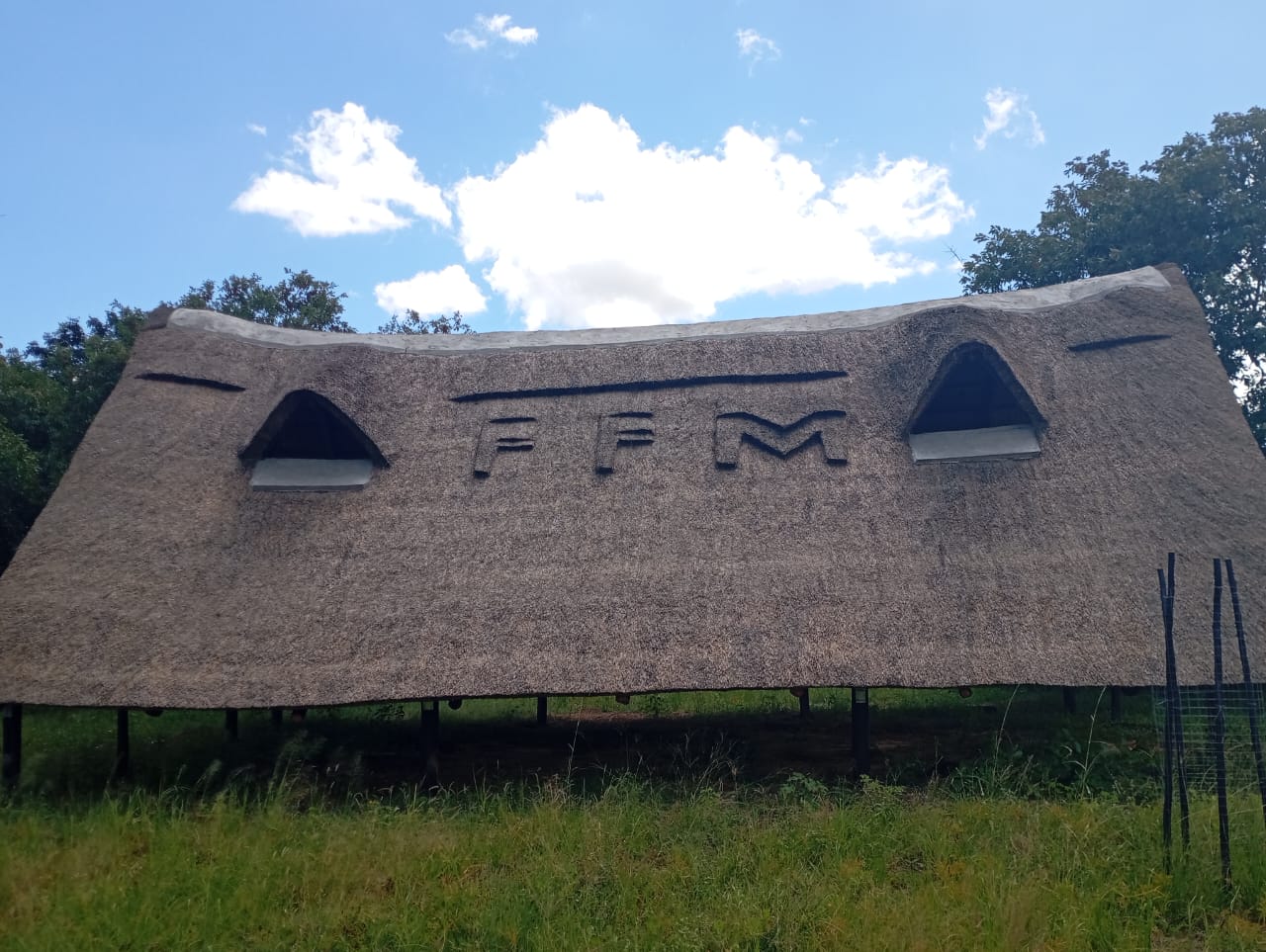
This project completes the hostel and guest accommodation structures at Matibi Nook Hub — unlocking residential capacity for 50+ learners per cycle, enabling multi-day programs, and providing proper sanitation and solar power for the entire facility.
Current Situation
The structures — Hostel 1, Hostel 2, a Sanitary House, and two Guest Houses — have already been constructed to pillar level and roofed with traditional thatch, preserving the cultural and architectural heritage of the region. The completion phase will bring modern functionality to these structures while maintaining their traditional character: cool natural interiors, pillared foundations, and thatched roofs.
Without proper accommodation, the Nook is limited in its ability to host residential learning programs, leadership camps, and partnerships with national and international organisations.
Implementation Phases
- 1.Hostel 1 (2–3 months) — flooring, wall finishing, doors, windows, electrical wiring and lighting, beds and storage. Capacity: 25+ learners. Activates first residential programs.
- 2.Sanitary House (1–2 months) — toilets and showers (separate male/female), plumbing, septic system, water tanks, handwashing stations.
- 3.Hostel 2 (2–3 months) — same scope as Hostel 1. Combined capacity reaches 50+ students.
- 4.Guest House 1 (1–2 months) — interior finishing, bathroom, kitchenette, electrical. Accommodates visiting facilitators and partners.
- 5.Guest House 2 (1–2 months) — same scope. Additional hosting for donors, researchers, and volunteers.
- 6.Solar Energy Installation (1 month) — 10kVA system for hostels, sanitary house, outdoor lighting, and water pump; 5kVA system for guest houses and office/ICT equipment.
Expected Outcomes
- •50+ learners accommodated per Nook cycle for full residential programs
- •Modern sanitation and hygiene facilities meeting safety standards
- •Reliable off-grid solar power reducing long-term operational costs
- •Increased capacity to attract national and international partners and donors
- •Cultural heritage preserved through traditional thatched pillar architecture
Estimated total project duration: 8–12 months depending on funding flow and procurement timelines.