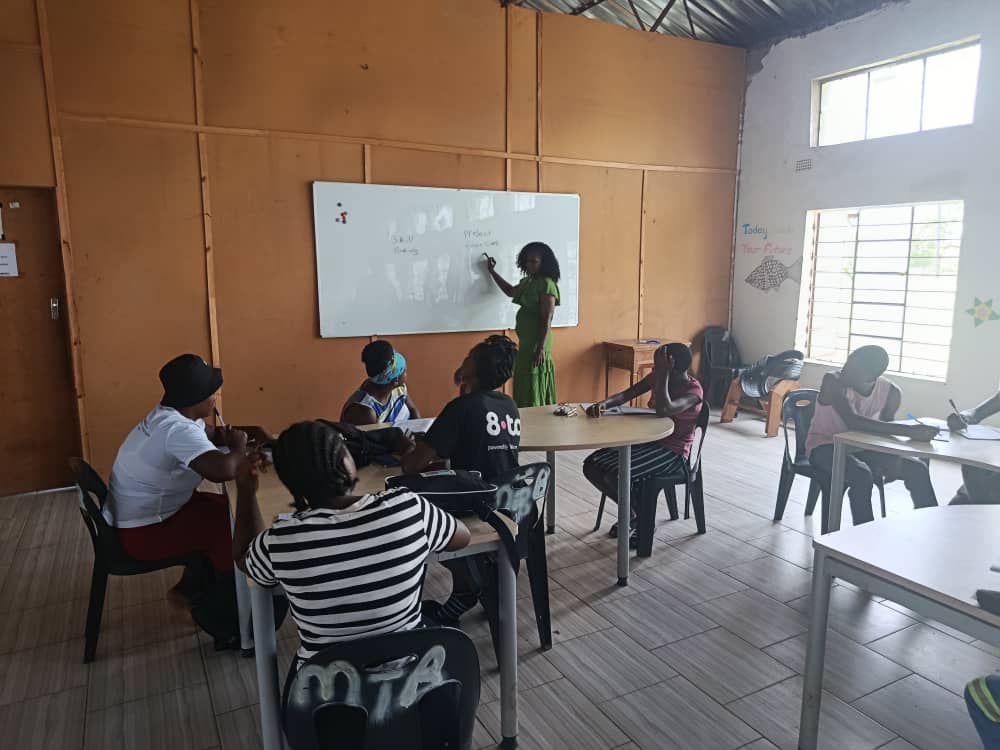
Goal setting is more than simply writing down dreams—it is the foundation for personal growth, resilience, and meaningful change. At Matibi Nook, the 9th Cycle places strong emphasis on goal setting as a practical life skill that empowers learners to take control of their futures, despite the social and economic challenges faced in rural Mwenezi.
For many young people and women in Matibi, life has often been shaped by circumstance rather than choice. Limited access to employment, education, and capital can make the future feel uncertain. The 9th Cycle of Matibi Nook seeks to shift this narrative by equipping learners with the mindset and tools to define their own direction, set achievable goals, and work consistently towards them.
Why Goal Setting Matters in Rural Communities
In rural contexts, survival often takes priority over long-term planning. However, without clear goals, individuals can remain trapped in cycles of poverty and dependency. Goal setting helps learners move from reaction to intention. It encourages them to ask critical questions such as:
- •What do I want to achieve in the next year?
- •What skills do I already have, and which ones do I need to develop?
- •How can I turn what I learn into income or community impact?
At Matibi Nook, goal setting is taught as a practical survival and empowerment tool, not an abstract concept. Learners are guided to align their goals with real opportunities available in their environment—agriculture, small businesses, crafts, services, and community initiatives.
The Goal-Setting Process in the 9th Cycle
During the 9th Cycle, participants are encouraged to set short-term, medium-term, and long-term goals:
Short-term goals focus on what can be achieved during the cycle itself—such as mastering a skill, completing a project, or starting a small income-generating activity.
Medium-term goals look at life beyond the Nook, including business growth, further training, or supporting family needs.
Long-term goals invite learners to think bigger: financial independence, leadership roles, educating their children, or contributing to community development.
Learners are taught to make their goals clear, realistic, and measurable, breaking them down into small steps that can be acted on daily. This approach builds confidence and reduces fear of failure.
Linking Goals to Skills and Action
A key lesson in the 9th Cycle is that goals without action remain wishes. At Matibi Nook, goal setting is directly connected to hands-on skills training. Whether learners are involved in baking, tailoring, permaculture, detergent making, hairdressing, or entrepreneurship, each skill becomes a stepping stone toward a defined goal.
Participants are encouraged to:
- Match their goals with the skills they are learning
- Identify local resources they can use
- Track progress and adjust when challenges arise
Building Discipline, Confidence, and Accountability
Goal setting also helps learners develop discipline and accountability. By regularly reviewing their goals, participants learn to take responsibility for their progress. They begin to understand that setbacks are part of the journey, not reasons to give up.
Through group discussions and mentorship at the Nook, learners share goals, encourage one another, and celebrate milestones. This collective support strengthens motivation and reinforces the belief that success is possible—even in difficult circumstances.
Creating a Culture of Hope and Vision
Perhaps the most powerful impact of goal setting in the 9th Cycle is the creation of a culture of hope. Learners begin to see themselves not as victims of poverty, but as capable individuals with potential, vision, and agency.
By teaching goal setting, Matibi Nook is not just preparing individuals for work—it is nurturing leaders, entrepreneurs, and change-makers who can uplift their families and communities.
The 9th Cycle of Matibi Nook demonstrates that goal setting is a transformative skill. When combined with practical training, mentorship, and community support, it becomes a pathway out of poverty and toward dignity and self-reliance. At Matibi Nook, every goal set is a step toward a stronger individual, a stronger family, and a stronger Matibi community.